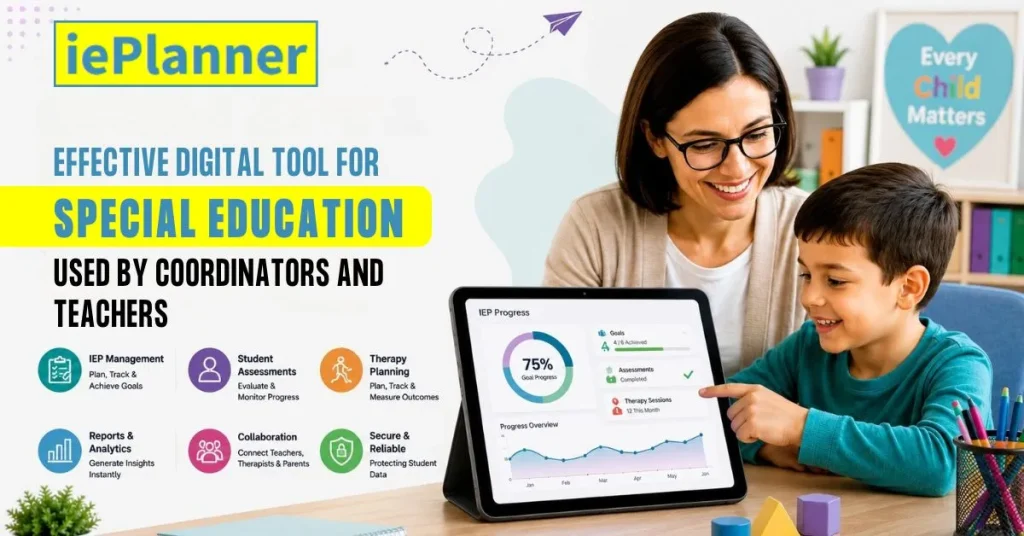
In today’s rapidly evolving educational environment, technology is transforming how schools support children with special needs. From managing Individualized Education Programs (IEPs) to tracking therapy progress and student assessments, digital tools for special education have become essential for coordinators, therapists, and teachers.
Educational institutions are increasingly adopting special education software to improve collaboration, reduce paperwork, and provide personalized learning support for every student.
One such growing solution is the use of integrated digital platforms like IEPlanner, designed specifically for special education professionals and institutions.
Why Digital Tools Are Important in Special Education
Managing special education programs manually can be time-consuming and prone to errors. Teachers and coordinators often handle:
- Student assessments
- IEP documentation
- Goal tracking
- Therapy planning
- Parent communication
- Progress reports
- Compliance documentation
Using a digital tool for special education helps streamline these tasks while improving accuracy, transparency, and student outcomes.
Key Features of an Effective Special Education Tool
1. IEP Goal Tracking
An effective platform allows teachers to:
- Create IEP goals
- Monitor student progress
- Update achievements regularly
- Generate progress reports
This ensures every child receives individualized support based on their learning needs.
2. Student Assessment Management
Special educators require accurate data to understand a child’s strengths and challenges.
Digital assessment tools help:
- Conduct evaluations efficiently
- Store assessment records securely
- Compare developmental progress over time
- Plan interventions effectively
3. Collaboration Between Teachers and Coordinators
A centralized digital system improves communication between:
- Coordinators
- Therapists
- Teachers
- Parents
Everyone can access updated student information, reducing confusion and improving coordinated care.
4. Therapy Planning and Monitoring
Many children with special needs require:
- Speech therapy
- Occupational therapy
- Behavioral therapy
- Sensory interventions
Special education software helps therapists:
- Schedule sessions
- Track therapy outcomes
- Maintain therapy notes
- Measure improvements
5. Automated Reporting
Preparing manual reports can consume hours of administrative work.
An online special education platform can automatically generate:
- Progress reports
- IEP summaries
- Assessment reports
- Parent communication reports
This saves time for teachers and improves institutional efficiency.
Benefits for Teachers
Better Classroom Management
Teachers can easily organize:
- Student records
- Learning goals
- Intervention plans
- Performance updates
This allows more focus on teaching rather than paperwork.
Personalized Learning Support
Digital tools help teachers identify:
- Student strengths
- Areas needing support
- Behavioral patterns
- Therapy requirements
This enables customized education plans for better learning outcomes.
Benefits for Special Education Coordinators
Easier Monitoring Across Students
Coordinators can:
- Review student progress centrally
- Track teacher updates
- Monitor pending assessments
- Ensure IEP compliance
Improved Institutional Efficiency
Using a centralized platform reduces:
- Duplicate records
- Manual errors
- Administrative burden
- Data loss risks
How IEPlanner Helps Special Education Professionals
Platforms like IEPlanner are designed specifically for:
- Special educators
- Therapy centers
- Inclusive schools
- Rehabilitation institutes
It helps institutions:
- Manage IEP goals online
- Conduct special needs assessments
- Track therapy goals
- Maintain student progress records
- Improve collaboration among teams
The platform simplifies daily operations while ensuring better support for children with special educational needs.
Features Schools Should Look for in Special Education Software
Before selecting a digital tool, schools should ensure the software offers:
- Easy-to-use dashboard
- Secure student data storage
- IEP management
- Assessment modules
- Progress tracking
- Multi-user collaboration
- Cloud accessibility
- Reporting automation
- Therapy planning tools
Future of Digital Learning in Special Education
Technology is becoming a vital part of inclusive education. Modern digital tools allow educators to provide:
- Faster interventions
- Personalized teaching strategies
- Better therapy coordination
- Improved student engagement
As schools continue embracing digital transformation, special education software will play a major role in improving learning outcomes for children with diverse needs.
Conclusion
An effective digital tool for special education empowers teachers and coordinators to deliver better educational support while simplifying administrative responsibilities.
From IEP management to therapy tracking and student assessments, modern special education software helps institutions create a more organized, collaborative, and student-focused learning environment.
Platforms like IEPlanner are helping schools and educators move toward smarter, more efficient, and inclusive education systems.
FAQs
1. What is a digital tool for special education?
A digital tool for special education is software designed to help educators manage IEPs, student assessments, therapy planning, and progress tracking efficiently.
2. Why is IEP tracking important in special education?
IEP tracking helps teachers monitor student progress, achieve learning goals, and ensure personalized educational support.
3. How do digital tools help special education coordinators?
They simplify student monitoring, reporting, communication, and compliance management across multiple students and teachers.
4. What features should special education software include?
The software should include IEP management, assessment tracking, progress reporting, therapy planning, and collaboration tools.
5. Can digital tools improve inclusive education?
Yes, digital platforms help educators provide personalized support, improve collaboration, and enhance student learning outcomes.