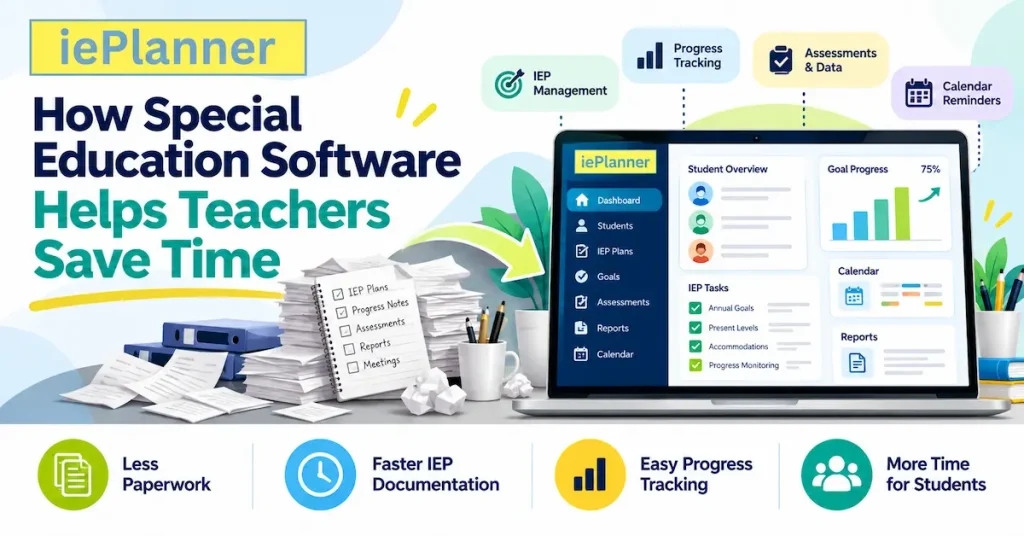
Teachers working in special education manage much more than classroom teaching. They may need to prepare IEPs, record assessments, set individual learning goals, track student progress, communicate with parents and other professionals, and maintain detailed student records.
When these tasks are managed manually, they can take a significant amount of time.
Special education software can help teachers organize these responsibilities in one place. By reducing repetitive administrative work, the right software allows teachers to spend more time focusing on students and their learning needs.
1. Manage Student Information in One Place
Special education teachers often work with a large amount of student information. Keeping records in separate files, spreadsheets, notebooks, and documents can make information difficult to find.
Special education software provides a centralized system where teachers can organize important student information.
Instead of searching through multiple files, teachers can access the information they need from one platform.
2. Save Time Creating IEPs
Creating and updating Individualized Education Programs (IEPs) can be a time-consuming task.
Teachers need to document student needs, learning goals, support strategies, assessments, and progress. Special education software can make this process more organized by providing structured tools for creating and managing IEPs.
This reduces the need to repeatedly create documents from scratch.
3. Track IEP Goals More Easily
Tracking individual goals is an important part of special education.
Teachers may need to monitor several goals for each student and regularly record progress. Managing this information manually can become difficult, especially when teachers are responsible for many students.
IEP goal tracking software helps teachers record goals and monitor progress in a more organized way.
Teachers can review goals, update progress, and identify areas where a student may need additional support.
4. Reduce Repetitive Paperwork
Paperwork is one of the biggest administrative responsibilities for special education professionals.
Teachers may spend time creating records, updating documents, maintaining assessment information, and preparing reports.
A digital system can reduce repetitive data entry and make information easier to update. Once information is stored digitally, teachers can reuse and update it instead of recreating the same information.
5. Make Assessments More Organized
Assessments help teachers understand a student’s strengths, needs, and development.
However, managing assessment information across different documents can take time.
Special education management software can help organize assessment records and make it easier to review student information when planning learning goals and support.
This can also help teachers connect assessment findings with a student’s individual goals.
6. Improve Collaboration Between Teachers and Professionals
Special education often involves several professionals, including teachers, special educators, therapists, coordinators, and other support staff.
Sharing information through emails, paper files, or separate documents can create unnecessary work.
A centralized software platform can help relevant team members access and update information more efficiently, depending on their roles and permissions.
This can reduce repeated communication and make collaboration more organized.
7. Keep Progress Records Updated
Teachers need to regularly monitor how students are progressing toward their individual goals.
With paper-based systems, updating progress records can take considerable time.
Digital software makes it easier to enter progress information regularly and review previous records. Teachers can spend less time organizing paperwork and more time understanding what the progress means for the student.
8. Support Individualized Teaching
Every student has different learning needs.
Teachers may need to create different goals, activities, teaching strategies, and support plans for different students.
Special education software can help organize these individual requirements so that teachers can quickly review what each student needs.
This makes it easier to plan personalized support without searching through multiple documents.
9. Make Reports and Documentation Easier
Schools often need proper documentation related to student assessments, IEPs, goals, and progress.
Preparing this information manually can be repetitive.
A well-designed special education software platform can keep information structured, making it easier for teachers and coordinators to review student records and prepare necessary documentation.
10. Help Teachers Spend More Time With Students
The biggest benefit of saving administrative time is simple: teachers can spend more time focusing on students.
Instead of spending large amounts of time searching for records, updating spreadsheets, or managing paperwork, teachers can use that time for:
- Individual teaching
- Student support
- Classroom activities
- Progress discussions
- Parent communication
- Planning learning activities
- Monitoring student development
Technology does not replace the role of a special education teacher. Instead, it can reduce some of the administrative workload around teaching.
How IE Planner Helps Special Education Teams
IE Planner is designed to support schools, special education professionals, and teams managing individualized education and student progress.
The platform can help organize areas such as:
- Student information
- IEP management
- Individual learning goals
- Goal tracking
- Assessments
- Student progress
- Special education planning
- Speech therapy goals
- Occupational therapy goals
By bringing important information into a centralized system, IE Planner can help special education teams reduce manual work and manage student information more efficiently.
Conclusion
Special education teachers have many responsibilities beyond classroom teaching. Managing IEPs, assessments, student records, goals, and progress can take valuable time when everything is handled manually.
Special education software can simplify these processes by bringing important information together in one organized system.
The goal is not simply to reduce paperwork. It is to help teachers use their time more effectively so they can focus more on teaching, supporting, and helping every student make progress.
For schools and special education teams looking to reduce administrative work and improve the organization of IEPs, assessments, goals, and student progress, a centralized platform such as IE Planner can be a useful part of their digital workflow.