Introduction
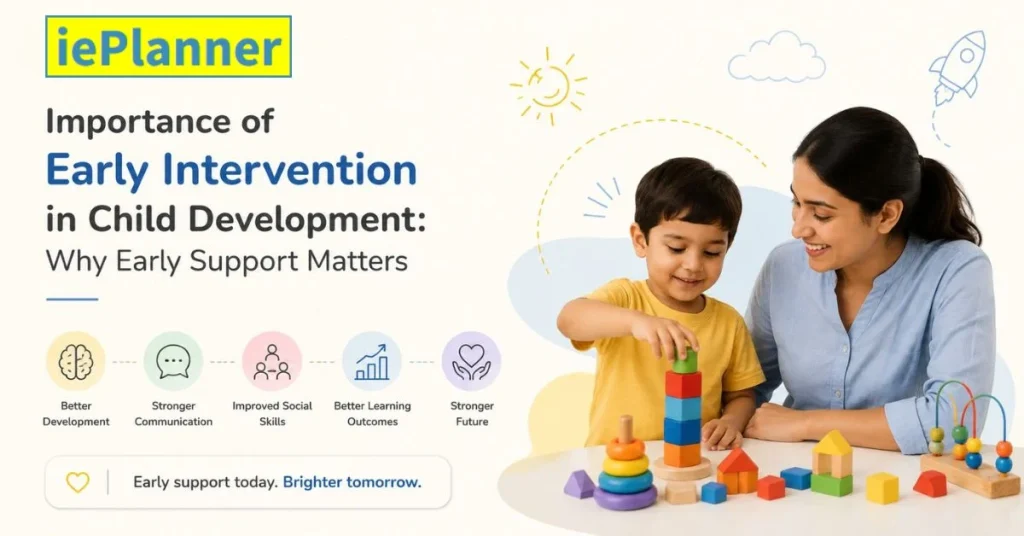
The early years of a child’s life are an important period for learning and development. During this time, children rapidly develop communication, cognitive, social, emotional, motor, and everyday living skills. When developmental difficulties are identified early, appropriate support can help children build skills and participate more successfully at home, in school, and in their communities.
This is where early intervention in child development becomes important. Early intervention focuses on identifying developmental needs and providing appropriate educational, therapeutic, and family support as early as possible.
For children with developmental delays or special educational needs, early intervention can also provide a stronger foundation for individualized learning. Schools, educators, therapists, and families can work together to establish measurable goals and monitor progress over time.
What Is Early Intervention in Child Development?
Early intervention in child development refers to services and support provided to young children who have developmental delays, disabilities, or other identified developmental needs.
Depending on the child, early intervention may involve professionals such as special educators, speech-language therapists, occupational therapists, physiotherapists, psychologists, and other qualified specialists.
Support may focus on areas including:
- Speech and language development
- Cognitive and learning skills
- Fine and gross motor skills
- Social and emotional development
- Behaviour and self-regulation
- Sensory needs
- Self-care and everyday living skills
The exact approach should always be based on an individual assessment because every child develops differently.
Why Is Early Intervention Important?
Early childhood provides many opportunities to develop foundational skills. Identifying concerns early can give families and professionals more time to understand a child’s needs and introduce appropriate strategies.
Rather than waiting until difficulties significantly affect classroom participation or everyday activities, early intervention allows support to begin when concerns are identified.
It can also help educators develop realistic teaching goals for special education needs children and continuously adjust those goals according to the child’s progress.
1. Helps Identify Developmental Needs Early
One of the biggest advantages of early intervention is timely identification.
Parents or teachers may notice that a child is having difficulty with areas such as speaking, following instructions, interacting with peers, completing age-appropriate activities, or developing motor skills.
Early assessment can help professionals understand whether additional support may be beneficial.
Importantly, children develop at different rates. A developmental difference does not automatically mean that a child has a disability. Concerns should be discussed with an appropriately qualified professional rather than relying on comparisons alone.
2. Supports Speech and Communication Development
Communication plays an important role in learning, relationships, and independence.
Some children may experience difficulties with pronunciation, vocabulary, understanding language, expressing needs, or participating in conversations. Early speech and language support can focus on developing these skills through individualized activities and goals.
For example, communication goals might include increasing functional vocabulary, following simple instructions, answering questions, initiating interactions, or communicating needs more independently.
Clear goals make it easier for therapists, teachers, and families to reinforce the same skills consistently.
3. Strengthens Social and Emotional Skills
Young children gradually learn how to interact with others, communicate emotions, participate in groups, and manage everyday situations.
Children who need additional support may benefit from structured opportunities to practice skills such as sharing, taking turns, recognizing emotions, communicating appropriately, and participating in group activities.
These abilities can help children participate more confidently in inclusive classroom environments.
4. Develops Motor and Everyday Living Skills
Development also involves physical and functional abilities.
Depending on individual needs, intervention may support fine motor skills such as holding objects, drawing, writing, or using everyday materials. It may also address gross motor abilities involving movement, balance, and coordination.
For some children, goals may additionally focus on everyday activities such as dressing, eating, organizing belongings, or following routines.
Building functional skills can encourage greater participation and independence.
5. Creates a Foundation for Learning
Skills developed during early childhood can support later classroom learning.
Attention, communication, following instructions, problem-solving, social interaction, and motor coordination can all influence how children participate in educational activities.
Early intervention can help identify areas in which a child needs additional support before academic demands become more complex.
Educators can then adapt teaching strategies and learning goals according to the child’s abilities rather than relying on a one-size-fits-all approach.
6. Supports Individualized Education Planning
Every child with special educational needs has different strengths and challenges. Therefore, effective intervention requires individualized goals.
An educational plan may include goals related to communication, academics, social interaction, behaviour, motor abilities, or functional independence.
Effective goals should be specific, measurable, appropriate for the individual child, and regularly reviewed.
This makes progress monitoring an essential part of early intervention.
7. Encourages Collaboration Between Parents, Teachers, and Specialists
Children often receive support from several people, including parents, classroom teachers, special educators, therapists, and other professionals.
When everyone works independently, important information can become fragmented. Collaboration helps the team understand what strategies are being used, what progress has occurred, and where additional support may be necessary.
Regular communication also helps reinforce skills across different environments.
For example, a communication skill introduced during therapy may also be practiced in the classroom and at home.
Why Progress Tracking Is Essential in Early Intervention
Early intervention is not simply about creating goals. Schools and professionals also need to understand whether interventions are helping the child make meaningful progress.
Regular progress monitoring can help answer questions such as: Is the child progressing toward the established goal? Which strategies appear effective? Does a goal need to be modified? Is additional assessment or support required?
Without organized documentation, these decisions can become difficult—particularly when several educators and specialists are working with the same student.
How IE Planner Supports Early Intervention and Individualized Education
Digital technology can help schools organize individualized educational support more efficiently.
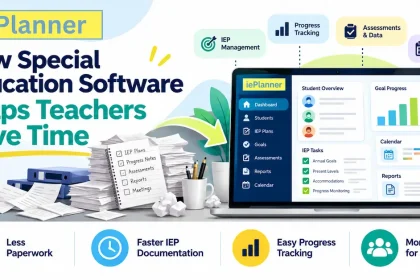
IE Planner is a special education and inclusive education management solution designed to help educators organize student information, individualized education planning, assessments, goals, and progress monitoring in one centralized environment.
For children receiving early intervention or special educational support, IE Planner can help educational teams maintain structured records and connect individual needs with measurable educational goals.
Educators can use the platform to manage areas such as individualized education plans, student assessments, teaching and developmental goals, progress records, documentation, and collaboration among professionals.
Rather than relying on scattered paperwork or multiple spreadsheets, having information organized in one system can make it easier for educational teams to review a child’s development and make informed planning decisions.
Connecting Early Intervention With Individualized Goals
Consider a child who has difficulty communicating their needs in the classroom.
After appropriate professional assessment, the educational team may establish a specific communication goal. Teachers and relevant specialists can document observations and progress toward that goal over time.
If progress is limited, the team can review the information and consider whether educational strategies or goals should be adjusted. When progress occurs, new objectives can be introduced.
A platform such as IE Planner can help organize this cycle of:
Assessment → Individualized Goal → Intervention → Progress Monitoring → Review → Updated Goal
This structured approach can make individualized education easier to manage while keeping the child’s needs at the center of educational planning.
How Parents Can Support Early Development
Parents and caregivers are important partners in a child’s development. Everyday routines can provide valuable opportunities to reinforce skills being addressed by educators or therapists.
Families can support development by talking and reading with children, encouraging play and interaction, providing opportunities for age-appropriate independence, maintaining predictable routines, and practicing strategies recommended by qualified professionals.
Most importantly, intervention should focus on the individual child rather than comparing their progress with other children.
Early Intervention and Inclusive Education
Early intervention and inclusive education share an important objective: helping children participate meaningfully in learning environments while receiving the support they need.
An inclusive approach recognizes that children learn in different ways. Instead of expecting every student to progress through identical methods, educators can adapt instruction, provide appropriate accommodations, establish individualized goals, and monitor progress.
Technology such as special education management software can support this process by giving schools a structured way to manage individualized educational information.
Conclusion
The importance of early intervention in child development lies in identifying needs early and providing timely, individualized support. When parents, educators, therapists, and other professionals collaborate, children can receive more coordinated support across communication, learning, social-emotional development, motor skills, and everyday functioning.
Early intervention is not about expecting every child to develop in exactly the same way. It is about recognizing individual strengths and needs and providing appropriate opportunities for growth.
For schools delivering inclusive and special education, IE Planner can support this process by helping educators organize individualized education plans, establish measurable goals, document assessments, and monitor student progress.
Combining timely professional intervention with structured educational planning can help schools create more responsive learning environments in which every child has the opportunity to develop, participate, and succeed.