Introduction
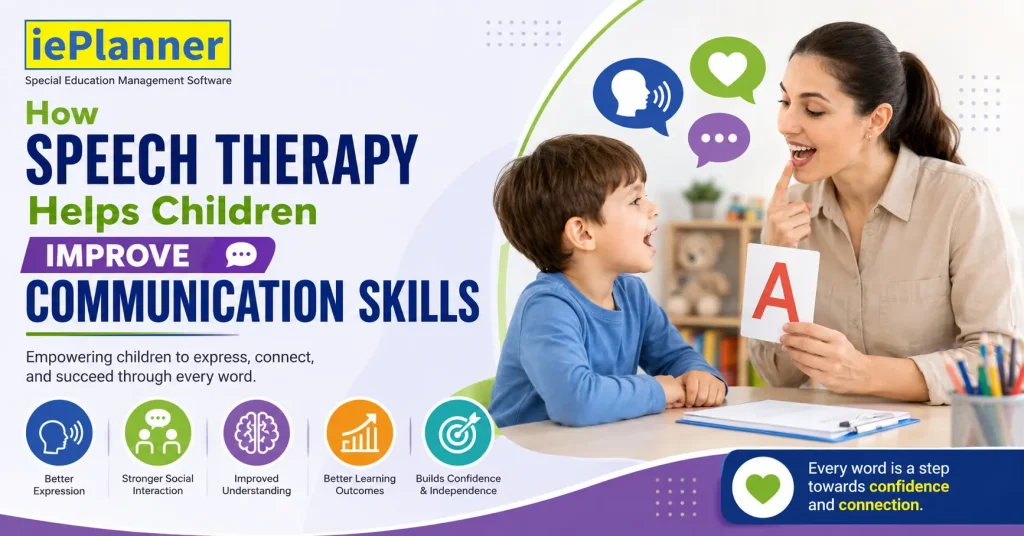
Communication is an essential part of a child’s development. It helps children express their thoughts, understand others, build relationships, participate in classroom activities, and become more independent. However, some children experience difficulties with speaking, understanding language, pronunciation, or social communication.
Speech therapy for children can help address these challenges through personalized exercises and structured intervention. A speech-language therapist evaluates a child’s communication needs and develops strategies to help improve their ability to communicate effectively.
For schools supporting children with special educational needs, combining speech therapy with individualized learning goals and regular progress tracking can make intervention more structured and effective.
What Is Speech Therapy for Children?
Speech therapy is a specialized service provided by a speech-language therapist to help children develop or improve communication and related skills.
Depending on the child’s needs, therapy may focus on:
- Speech sound and pronunciation
- Vocabulary development
- Understanding language
- Expressing thoughts and ideas
- Social communication
- Fluency
- Voice
- Alternative and augmentative communication
The therapy approach depends on the child’s age, abilities, communication challenges, and individual goals.
How Speech Therapy Helps Children Improve Communication Skills
1. Improves Speech and Pronunciation
Some children have difficulty producing certain sounds or pronouncing words clearly. Speech therapy uses age-appropriate exercises and activities to help children develop clearer speech.
Therapists may work on:
- Correct sound production
- Word pronunciation
- Speaking clearly
- Improving speech intelligibility
With consistent practice and support, children can become more confident when communicating with others.
2. Builds Vocabulary and Language Skills
Language development involves much more than speaking. Children need to understand words, sentences, questions, and instructions and learn how to use language appropriately.
Speech therapy can help children:
- Learn new words
- Understand instructions
- Build sentences
- Describe objects and events
- Answer questions
- Express their needs and ideas
These skills can also support better participation in classroom learning.
3. Develops Social Communication
Communication is also about interacting with other people. Some children may find it difficult to start conversations, take turns, understand social cues, or respond appropriately.
Speech-language therapists can use activities such as role-play, conversation practice, games, and social scenarios to develop these skills.
Improved social communication can help children participate more confidently in group activities and develop relationships with peers.
4. Helps Children Express Their Needs
Children who struggle to communicate may become frustrated when they cannot explain what they want or need.
Speech therapy provides strategies that help children communicate their:
- Needs
- Feelings
- Preferences
- Questions
- Ideas
- Experiences
For children who have limited verbal communication, therapists may also introduce alternative communication methods when appropriate.
5. Supports Listening and Understanding
Effective communication involves both speaking and listening.
Speech therapy can help children improve their ability to:
- Follow instructions
- Understand questions
- Identify important information
- Respond appropriately
- Follow conversations
Better receptive language skills can support learning both inside and outside the classroom.
6. Builds Confidence
Communication difficulties can sometimes affect a child’s confidence and willingness to participate.
As children develop better communication skills, they may become more comfortable:
- Answering questions
- Talking with classmates
- Participating in activities
- Asking for help
- Expressing their opinions
A supportive environment is important throughout this process.
Who Can Benefit From Speech Therapy?
Speech therapy may benefit children experiencing different communication challenges, including children with:
- Speech sound difficulties
- Language delays
- Autism spectrum disorder
- Developmental disabilities
- Communication difficulties
- Fluency disorders
- Hearing-related communication challenges
- Difficulties with social communication
Not every child will need the same type or amount of support. A qualified speech-language professional can assess the child’s individual needs and recommend appropriate intervention.
The Importance of Individualized Communication Goals
One of the most important aspects of supporting a child with communication difficulties is setting individualized goals.
For example, one child’s goal may be to pronounce specific sounds correctly, while another child’s goal may be to use complete sentences or participate in conversations.
Communication goals should be:
- Specific
- Age-appropriate
- Measurable
- Relevant to the child’s needs
- Regularly reviewed
Tracking these goals helps educators, therapists, and parents understand whether a child is making progress and whether additional support is required.
How Schools Can Support Speech and Language Development
Speech therapy is not limited to the therapy room. Schools can reinforce communication skills throughout the child’s daily learning experience.
Teachers can support communication development by:
Creating Opportunities to Communicate
Encourage children to answer questions, participate in discussions, describe activities, and interact with peers.
Using Visual Supports
Pictures, visual schedules, symbols, and written instructions can help children understand information and communicate more effectively.
Providing Additional Time
Some children need additional processing time before responding. Allowing them sufficient time can reduce pressure and encourage participation.
Collaborating With Speech Therapists
Regular communication between teachers and therapists helps ensure that classroom activities support the child’s communication goals.
How IE Planner Can Support Communication Goals
Managing individual communication goals can become challenging when schools rely on paper records or disconnected spreadsheets. IE Planner helps schools organize and manage individualized education planning and student progress in a centralized digital environment.
Educators can use the platform to support areas such as:
- Individualized learning goals
- Student assessments
- Goal tracking
- Progress monitoring
- Documentation
- Collaboration among education professionals
For a child receiving speech therapy, communication-related objectives can be incorporated into their broader individualized education plan. Teachers and relevant professionals can then monitor progress toward these goals and use the information to support educational planning.
This helps connect speech therapy goals with the child’s overall educational development, rather than treating communication support as an isolated activity.
Why Progress Tracking Matters
Speech and language development can take time, and progress may occur gradually. Regular documentation helps schools understand changes in a child’s communication abilities.
Progress tracking can help identify:
- Goals that have been achieved
- Skills that are improving
- Areas that require additional support
- Strategies that are working effectively
- New goals that may need to be introduced
With organized records, educators and specialists can make more informed decisions about a child’s educational support.
Supporting Children Beyond Speech Therapy
Parents and educators can reinforce communication skills through everyday activities. Reading together, talking about daily experiences, encouraging children to describe objects, and creating opportunities for conversation can all provide valuable practice.
Most importantly, children should feel encouraged rather than pressured when developing communication skills.
Conclusion
Speech therapy helps children improve communication skills by addressing individual difficulties related to speech, language, listening, and social communication. With appropriate assessment, personalized goals, consistent practice, and collaboration between therapists, teachers, and parents, children can make meaningful progress.
For schools, effective communication support also requires organized goal setting and progress monitoring. IE Planner provides a digital platform that helps educators manage individualized plans, track student goals, document assessments, and monitor progress.
By combining professional speech therapy with structured educational planning, schools can provide more coordinated support and help children become more confident and effective communicators.