Creating effective Individualized Education Program (IEP) goals is one of the most important responsibilities of special education professionals. Well-structured IEP goals help students with special needs achieve academic, behavioral, communication, and functional milestones according to their abilities and developmental stage.
However, many teachers and therapists struggle with setting appropriate goals for different age groups and educational levels. This is why understanding IEP goals according to grade level is essential for successful intervention planning and progress tracking.
In this guide, we will explore how grade-level IEP goals are developed, examples of goals for different grades, and how teachers can track student progress more effectively.
What are IEP Goals?
IEP goals are measurable objectives created for students with special needs based on their current abilities, learning requirements, and developmental challenges.
These goals are designed to help students improve in areas such as:
- Academic learning
- Communication skills
- Social interaction
- Motor development
- Behavioral skills
- Functional independence
IEP goals are customized according to the student’s:
- Age
- Grade level
- Developmental needs
- Learning abilities
- Therapy requirements
Why Grade-Level IEP Goals are Importan
Developing IEP goals according to grade level ensures that educational expectations remain realistic, structured, and developmentally appropriate.
Benefits of Grade-Level IEP Goals
Better Learning Progression
Students receive goals aligned with their educational stage and learning abilities.
Improved Academic Planning
Teachers can integrate classroom curriculum with individualized support strategies.
Easier Progress Monitoring
Structured grade-wise goals help educators measure improvement systematically.
Stronger Collaboration
Parents, therapists, and educators can work together with clear developmental expectations.
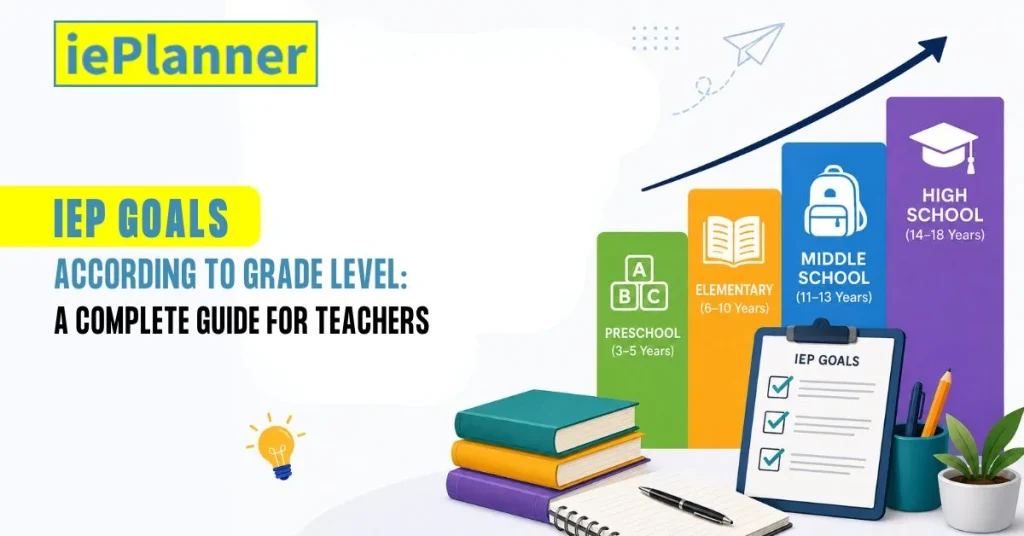
IEP Goals According to Grade Level
Preschool IEP Goals (Ages 3–5)
At the preschool level, goals mainly focus on foundational developmental skills.
Common Preschool Goals
- Improve eye contact and social interaction
- Follow one-step instructions
- Develop fine motor skills
- Improve speech and communication
- Identify colors, shapes, and objects
- Improve sensory regulation
Kindergarten IEP Goals
Kindergarten goals focus on school readiness and basic academic development.
Example Goals
- Recognize letters and numbers
- Improve pencil grasp and handwriting readiness
- Follow classroom routines
- Improve expressive language
- Participate in group activities
Elementary School IEP Goals (Grades 1–5)
At this stage, goals become more academic and functional.
Academic Goals
- Reading comprehension
- Basic mathematics
- Writing simple sentences
- Vocabulary development
Behavioral Goals
- Improve attention span
- Reduce classroom disruptions
- Follow multi-step instructions
Social Goals
- Participate in peer activities
- Improve communication skills
- Develop emotional regulation
Middle School IEP Goals (Grades 6–8)
Middle school goals focus on independence, organization, and advanced academic skills.
Common Goals
- Improve time management
- Increase independent task completion
- Develop problem-solving skills
- Improve written communication
- Strengthen social interaction
High School IEP Goals (Grades 9–12)
High school IEP goals often prepare students for vocational training, higher education, and independent living.
Transition Goals
- Career readiness
- Functional life skills
- Independent communication
- Community participation
- Self-advocacy skills
How to Create Effective IEP Goals
An effective IEP goal should be:
- Specific
- Measurable
- Achievable
- Relevant
- Time-bound
Professionals often use the SMART goal framework while creating IEP goals.
Example of a SMART IEP Goal
Instead of writing:
❌ “Student will improve reading.”
Use:
✅ “Student will read grade-level passages with 80% accuracy in 4 out of 5 trials within 6 months.”
This makes the goal measurable and trackable.
Challenges Teachers Face in IEP Goal Planning
Many educators and therapists face challenges such as:
- Managing multiple student goals
- Tracking progress manually
- Maintaining documentation
- Coordinating with therapists and parents
- Updating goals regularly
This is why many institutions now use digital IEP management systems.
How IEPlanner Helps with IEP Goal Planning and Tracking
IEPlanner Software is an advanced special education software designed to help professionals create, manage, and monitor IEP goals efficiently.
The platform helps teachers and therapists:
- Create individualized education plans
- Manage grade-level goals
- Track student progress
- Generate assessment reports
- Monitor intervention outcomes
- Coordinate with parents and professionals
IEPlanner simplifies documentation and helps professionals manage IEP planning through a centralized digital platform for special education and therapy management.
IEP Goal Tracking Checklist for Teachers
Tracking IEP progress consistently is equally important as creating goals.
Below is a practical IEP Goal Tracking Checklist for Teachers.
Essential IEP Goal Tracking Checklist
Student Information
✔ Student name and grade level
✔ Developmental and assessment reports
✔ Current academic performance
Goal Planning
✔ SMART IEP goals defined
✔ Grade-level expectations identified
✔ Therapy and intervention goals added
Progress Monitoring
✔ Weekly progress records maintained
✔ Classroom observations documented
✔ Therapy session notes updated
Parent Communication
✔ Parent meetings conducted
✔ Progress reports shared regularly
✔ Home strategies discussed
Assessment and Review
✔ Monthly goal evaluation completed
✔ Goals modified if required
✔ Progress reports generated
Benefits of Using Digital IEP Tracking Systems
Digital platforms help teachers:
- Reduce paperwork
- Improve reporting accuracy
- Access records anytime
- Monitor long-term progress
- Coordinate with therapists and administrators
This improves overall efficiency and student outcomes.
Conclusion
Creating IEP goals according to grade level helps teachers provide structured and developmentally appropriate support for students with special needs.
At the same time, regular tracking and documentation are essential for measuring progress and improving intervention strategies.
Using advanced platforms like IEPlanner can simplify IEP planning, assessment, and progress monitoring for teachers, therapists, and special education professionals through a centralized digital system designed specifically for special needs education.