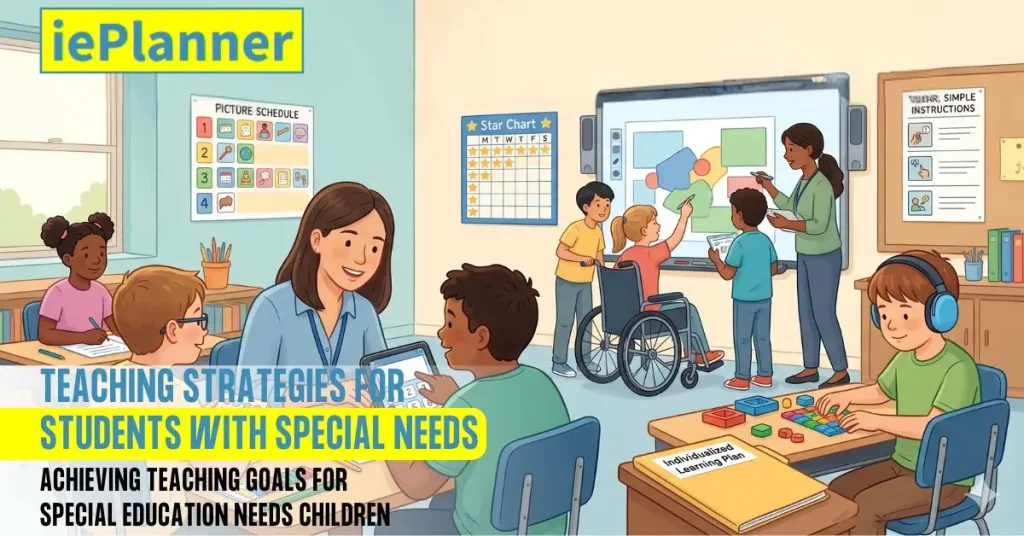
Every child deserves an opportunity to learn, grow, and reach their full potential. For students with special needs, effective teaching requires patience, flexibility, and evidence-based instructional methods. Educators play a critical role in creating inclusive learning environments that support academic, social, emotional, and life skills development.
Establishing clear teaching goals for special education needs children is one of the most important steps in helping students succeed. These goals provide a roadmap for learning and enable teachers to measure progress while addressing individual strengths and challenges.
In this article, we explore practical teaching strategies that help educators achieve meaningful outcomes for students with special educational needs.
Understanding Special Education Needs
Students with special needs may have a wide range of learning differences, including:
- Autism Spectrum Disorder (ASD)
- Attention Deficit Hyperactivity Disorder (ADHD)
- Learning Disabilities
- Intellectual Disabilities
- Speech and Language Disorders
- Sensory Impairments
- Physical Disabilities
- Emotional and Behavioral Challenges
Because every child is unique, teaching approaches should be personalized to meet individual learning requirements.
Importance of Teaching Goals for Special Education Needs Children
Well-defined teaching goals for special education needs children help educators focus on measurable outcomes while supporting overall development.
Effective goals can help:
- Improve academic achievement
- Enhance communication skills
- Develop social interaction abilities
- Build independence and self-confidence
- Strengthen emotional regulation
- Improve daily living skills
- Support long-term success
Teaching goals should be realistic, achievable, and tailored to the child’s individual needs and abilities.
Effective Teaching Strategies for Students With Special Needs
1. Individualized Learning Plans
Each student learns differently. Developing personalized learning plans helps teachers adapt lessons to suit individual strengths and challenges.
Key elements include:
- Learning objectives
- Assessment methods
- Classroom accommodations
- Progress monitoring
- Behavioral support strategies
Individualized planning ensures that teaching goals remain relevant and attainable.
2. Break Tasks into Smaller Steps
Complex assignments can feel overwhelming for many students with special needs.
Breaking lessons into manageable steps helps students:
- Stay focused
- Understand instructions more clearly
- Experience success more frequently
- Build confidence gradually
This approach supports the achievement of specific teaching goals for special education needs children by reducing frustration and increasing engagement.
3. Use Visual Learning Supports
Visual aids can significantly improve comprehension and retention.
Examples include:
- Picture schedules
- Charts and diagrams
- Flashcards
- Graphic organizers
- Visual instructions
- Educational videos
Visual supports are especially beneficial for students with autism, language difficulties, and learning disabilities.
4. Encourage Multi-Sensory Learning
Students often learn best when multiple senses are involved.
Multi-sensory teaching may include:
- Hands-on activities
- Interactive games
- Movement-based learning
- Audio resources
- Tactile learning materials
This method enhances understanding and improves long-term memory retention.
5. Create a Structured Learning Environment
Consistency and routine help students feel secure and focused.
Teachers can create structure by:
- Maintaining predictable schedules
- Providing clear expectations
- Using visual timetables
- Offering advance notice of changes
A structured environment supports behavioral and academic goals effectively.
6. Provide Positive Reinforcement
Recognition and encouragement can motivate students to participate actively in learning.
Positive reinforcement may include:
- Verbal praise
- Reward systems
- Certificates
- Classroom privileges
- Progress celebrations
Positive feedback helps build confidence and encourages desired behaviors.
7. Foster Social Skills Development
Many students with special needs require support in developing social and communication skills.
Teachers can encourage social growth through:
- Group activities
- Peer mentoring
- Cooperative learning
- Role-playing exercises
- Communication games
Social skill development is often a key component of teaching goals for special education needs children.
8. Differentiate Instruction
Differentiated instruction allows teachers to modify content, teaching methods, and assessments based on student needs.
Strategies include:
- Flexible grouping
- Alternative assignments
- Modified learning materials
- Personalized learning pathways
Differentiation ensures every student can access and engage with the curriculum.
9. Collaborate with Parents and Specialists
Successful special education requires teamwork.
Teachers should regularly communicate with:
- Parents and caregivers
- Special educators
- Therapists
- School counselors
- Support staff
Collaboration helps create consistent learning experiences across home and school environments.
10. Integrate Educational Technology
Technology can make learning more accessible and engaging.
Useful tools include:
- Interactive learning software
- Speech-to-text applications
- Text-to-speech programs
- Educational apps
- Digital communication platforms
Technology can help students overcome barriers and achieve learning goals more effectively.
Examples of Teaching Goals for Special Education Needs Children
Depending on the student’s needs, goals may focus on various developmental areas.
Academic Goals
- Improve reading comprehension skills
- Enhance basic math abilities
- Increase writing proficiency
- Develop problem-solving skills
Communication Goals
- Expand vocabulary
- Improve verbal communication
- Strengthen listening skills
- Enhance expressive language abilities
Social Goals
- Participate in group activities
- Develop peer relationships
- Improve conversational skills
- Practice teamwork
Behavioral Goals
- Follow classroom routines independently
- Improve self-regulation
- Reduce disruptive behaviors
- Increase task completion
Life Skills Goals
- Improve personal hygiene
- Develop organizational skills
- Practice time management
- Enhance independent living skills
Measuring Progress in Special Education
Monitoring progress is essential for ensuring teaching strategies remain effective.
Teachers can use:
- Observations
- Assessments
- Student portfolios
- Progress reports
- Goal-tracking tools
Regular evaluation allows educators to adjust instruction and provide additional support when needed.
Creating an Inclusive Classroom
An inclusive classroom benefits all learners.
Teachers can promote inclusion by:
- Encouraging respect and acceptance
- Celebrating diversity
- Adapting learning materials
- Supporting collaborative learning
- Providing equal participation opportunities
Inclusive education helps students feel valued, supported, and empowered.
Conclusion
Implementing effective teaching strategies is essential for helping students with special needs thrive academically, socially, and emotionally. By setting clear and achievable teaching goals for special education needs children, educators can create meaningful learning experiences that support individual growth and success.
Through personalized instruction, positive reinforcement, structured environments, and collaborative support, teachers can empower every child to overcome challenges and reach their fullest potential. As inclusive education continues to evolve, thoughtful teaching practices remain the foundation of successful learning outcomes for children with special educational needs.